The history of China’s straw burning ban policy is, in effect, a microcosm of the country’s agricultural modernization, rural energy transition, environmental governance, and the evolution of grassroots administrative practice.
The most important historical conclusion is this: large-scale straw burning was not a problem that existed in China throughout history, nor did the prohibition begin only in recent years. The modern straw burning ban system was gradually established in the 1990s, took the form of a nationwide management regulation in 1999, was visibly strengthened around 2008, and was further incorporated into the air pollution prevention and control system after 2013.
What is more worth studying is the shift between the policy’s governance objectives and the way it has been implemented:
- The original focus was public safety. The priority was the risk of burning near airports, railways, and highways, with air pollution as a secondary concern.
- The focus later shifted toward regional air quality management. Straw burning became more closely linked, in policy terms, to urban smog and PM2.5 control.
- Later still, the scope of grassroots enforcement expanded and enforcement methods were intensified. Some localities adopted blanket bans, grid-based patrols, and accountability mechanisms, which produced a tension between policy costs and farmers’ production needs.
- The core of the policy debate is not whether burning causes pollution, but how far the prohibition should go, and who should bear the economic cost of disposing of straw.
I. Historical Timeline: How the Straw Burning Ban Took Shape Step by Step
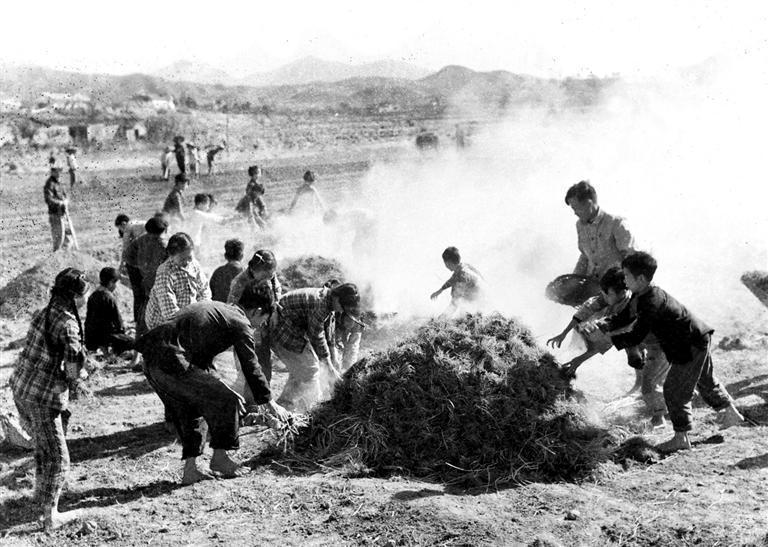
Before the 1980s
Straw was an agricultural resource with real uses
It was mainly used as cooking and heating fuel, livestock fodder, bedding in animal pens, composting material, and construction material. Open-field burning existed, but large amounts of straw were not without uses.
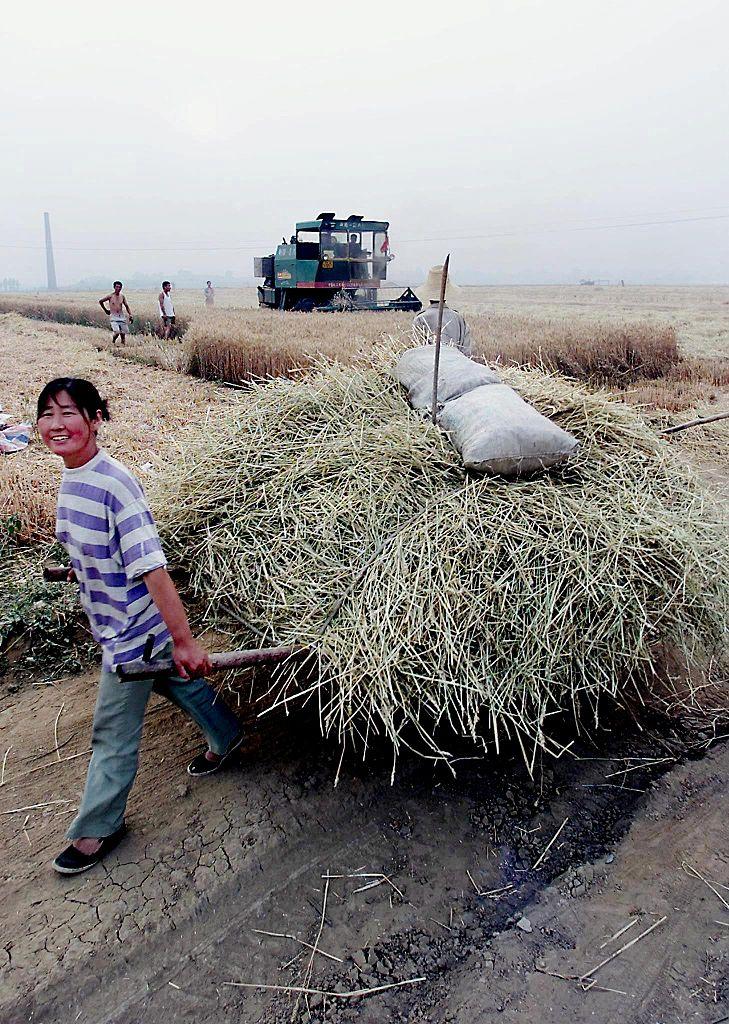
Late 1980s — 1990s
Large-scale concentrated burning became a social problem
Agricultural mechanization, the shift in rural household fuels, rising grain output, and the transfer of agricultural labor left some regions with concentrated straw surpluses. Burning gradually became the fastest way to clear fields.
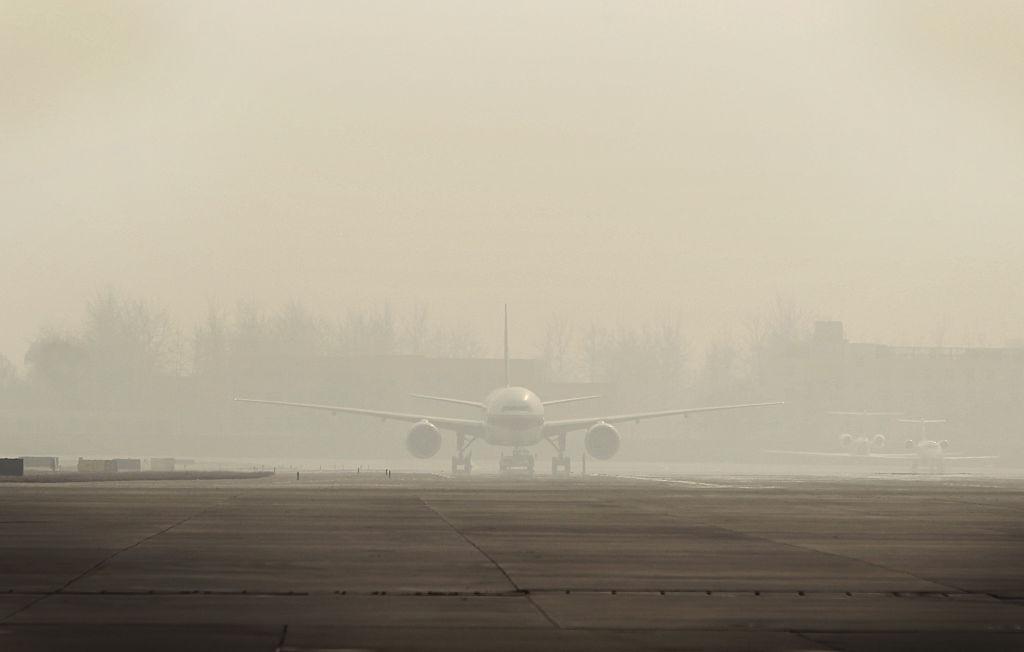
1999 — 2000
A nationwide burning ban management system was established
In 1999, six ministries jointly issued the Administrative Measures for the Prohibition of Straw Burning and Comprehensive Utilization; in 2000 the Air Pollution Prevention and Control Law was revised to make clear the ban on open-field straw burning in specific zones.

2008
Olympic air quality assurance pushed the ban forward
Beijing, Tianjin, and several surrounding provinces implemented strict burning bans during key periods, and the management scope of cities and key zones was expanded.
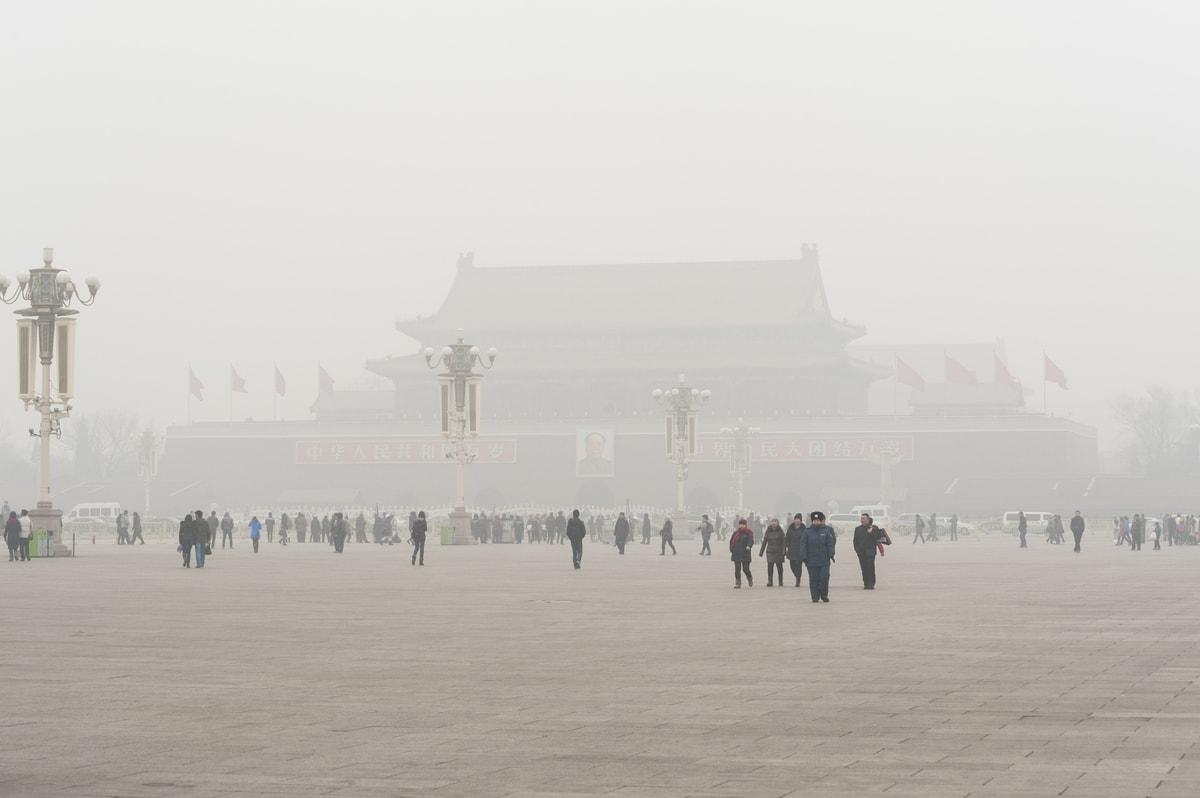
2013 — 2017
Binding with PM2.5 and air pollution prevention and control
The Action Plan for Air Pollution Prevention and Control was rolled out in full. In 2015 the Air Pollution Prevention and Control Law was revised, requiring provincial-level people’s governments to delineate burning ban zones and specifying the relevant legal liabilities.
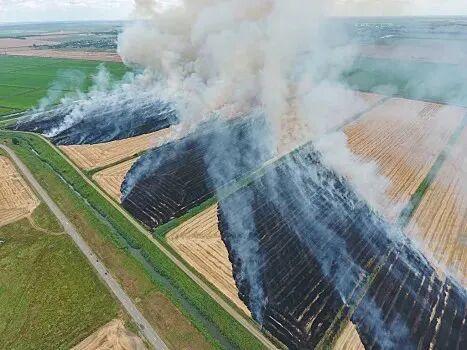
2018 to present
Granular grassroots regulation coexists with policy controversy
Grid-based regulation, satellite fire-point monitoring, and the comprehensive utilization of straw have continued to advance. Some regions have also explored zoned and time-phased burning management.
The phases above are anchored in national-level policy milestones, and do not assume that every province moved in lockstep each year.
II. 1949 — 1980s: Why Did Farmers Rarely Need to Burn Straw at Scale in the Past?
To explain today’s burning ban policy, one historical change must be understood first:
Straw has gradually shifted from a resource for production and daily life into, in some regions, an agricultural by-product that must be disposed of at a cost.
1. Traditional rural society had a relatively complete straw utilization system
In the old smallholder economy, straw had many practical uses.
| Use | Typical rural practice |
|---|---|
| Household fuel | Using wheat straw, rice straw, and corn stalks for cooking and heating |
| Livestock feed | Straw chopped and fed to ruminants such as cattle and sheep |
| Agricultural fertilizer | Composting, retting, bedding in pens, direct return to fields |
| Household materials | Weaving straw mats, making straw rope, roof covering |
| Agricultural support | Ground cover, moisture retention, partial erosion control |
This does not mean burning was absent in the past. Farmers also burned crop stubble and weeds, or used plant ash to supplement some mineral nutrients.
Yet in an era of material scarcity, straw had value as both fuel and a production input, and was not generally treated as waste.
2. The changes after the 1980s were decisive
As the rural economy developed, several changes piled up:
First, the rural energy mix changed. Coal, liquefied petroleum gas, electricity, and later natural gas gradually replaced direct straw burning, reducing the household demand for fuel.
Second, agricultural production was mechanized. Combine harvesters raised harvesting efficiency and at the same time left large amounts of straw concentrated in the field within a short window.
Third, farmers’ incomes and employment structure changed. Rural labor shifted toward non-agricultural industries, raising the opportunity cost of collecting, drying, transporting, and storing straw.
Fourth, the cropping system has strict time requirements. In particular, in rice–wheat and wheat–corn rotation areas, the gap between harvest and the next planting can be very short.
Farmers therefore faced an economic choice:
The field had to be cleared quickly, but straw could not be sold, hauling it away cost money, and leaving it in the field could interfere with sowing.
Open-field burning thus became the cheapest and fastest disposal method in some areas.
3. Historical documents confirm the shift
In June 2000, at the National Working Conference on Straw Burning Prohibition and Comprehensive Utilization, Xie Zhenhua, head of the State Environmental Protection Administration, offered a set of estimates for that moment:
- The country produced about 650 million tons of crop straw each year.
- About 50% was used for fertilizer and feed.
- About 30% was used for fuel and industrial raw material.
- About 20% was not effectively utilized.
- In some economically developed areas and the outskirts of large cities, the surplus ratio reached as high as 70% — 80%.
These numbers reflect the government’s estimate of straw resource utilization at that time and should not be read as current data.
From this, an important conclusion follows:
The problem of large-scale straw burning in modern China is, to a large extent, the result of rising agricultural productivity, the decline of traditional rural resource-use systems, and the failure of new mechanized collection-and-storage and resource-based utilization systems to be built in step.
III. The 1990s: Straw Burning Prohibition Begins to Be Institutionalized
1. Early governance was not driven solely by environmental concerns
In the 1990s, the government had already taken notice of straw burning, and an important reason was traffic safety.
Concentrated burning can cause local smoke density to rise sharply in a short time, directly threatening:
- Visibility for civil aircraft during takeoff and landing;
- Highway vehicle safety;
- Railway traffic safety;
- The safety of high-voltage transmission lines, forests, and related infrastructure.
Straw burning prohibition therefore has an obvious public-safety governance background.
2. 1999: the first landmark nationwide management document
On 12 April 1999, the State Environmental Protection Administration, jointly with the Ministry of Agriculture, the Ministry of Finance, the Ministry of Railways, the Ministry of Transportation, and the General Administration of Civil Aviation of China, issued:
Administrative Measures for the Prohibition of Straw Burning and Comprehensive Utilization (Huan Fa [1999] No. 98).
This document is one of the most important original sources for studying the history of modern straw burning prohibition in China.
It is especially worth noting that the 1999 measures did not simply order a blanket ban on burning across all farmland in the country.
Article 4 defined priority burning ban zones:
Priority Burning Ban Range Defined in 1999
15 km
Within a 15 km radius of an airport center
2 km
Within 2 km of each side of an expressway or railway
1 km
Within 1 km of each side of a national or provincial highway
The range also covered areas near high-voltage transmission lines, other zones lawfully designated by local governments, and allowed adjustments to the distances according to natural and climatic conditions.
Source: Huan Fa [1999] No. 98, Article 4.
This shows that the earliest institutional design mainly adopted priority-zone prohibition + local zoned management + promotion of comprehensive utilization, rather than a uniform nationwide burning ban across all farmland.
Another historical detail deserves particular attention: Article 8 of the 1999 measures allowed a fine of no more than 20 yuan to be imposed on the direct responsible person for illegal burning within the ban zone. This reflects a clear difference between the management regime of the time and the penalty levels that came later.
The original document is available here: Ministry of Ecology and Environment: 1999 Administrative Measures for the Prohibition of Straw Burning and Comprehensive Utilization.
IV. 2000 — 2007: From Sectoral Management to an Explicit Statutory Ban
The 2000 revision of the Air Pollution Prevention and Control Law of the People’s Republic of China, in Article 41, formally incorporated the straw burning ban into the legal system for air pollution prevention and control.
Its focus remained:
- Densely populated areas;
- The vicinity of airports;
- The vicinity of major transportation arteries;
- Other burning ban zones designated by the local people’s government.
During this period, the straw burning ban gradually shifted from specialized management by the environmental protection department to a standing task that local governments were required to undertake.
But the effect of the ban was unstable.
A 2008 document from the Ministry of Environmental Protection reviewed the fire points monitored by satellite in May — June 2007:
| Province | Fire points monitored in May — June 2007 |
|---|---|
| Henan | 1,013 |
| Jiangsu | 592 |
| Anhui | 577 |
| Shandong | 357 |
| Hebei | 280 |
Source: Ministry of Environmental Protection, Huan Fa [2008] No. 22. These are satellite fire-point counts for a specific monitoring period and are not equivalent to the total number of burning incidents for the year.
This shows that, by 2007, although the burning ban system had been in place for years, burning was still widespread in major agricultural producing areas such as the Huang-Huai-Hai region.
In Henan, Anhui, and Jiangsu in particular, after the summer harvest farmers had to rapidly organize the next crop, and concentrated burning had a strongly seasonal character.
V. 2008: Why Was the Beijing Olympics a Key Turning Point?

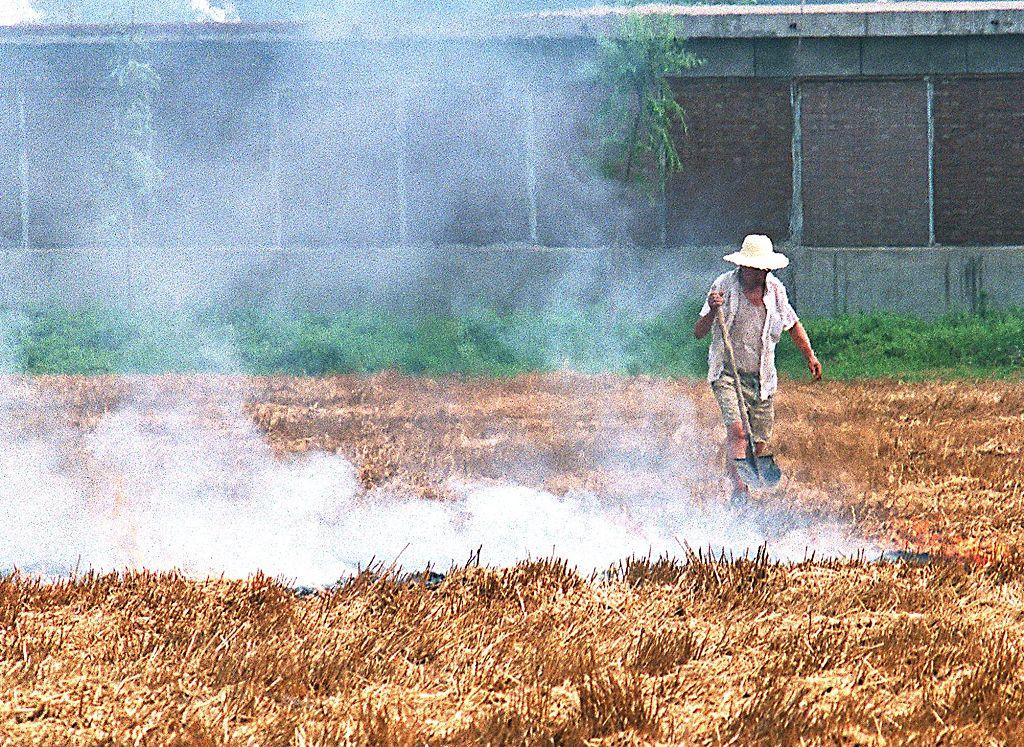
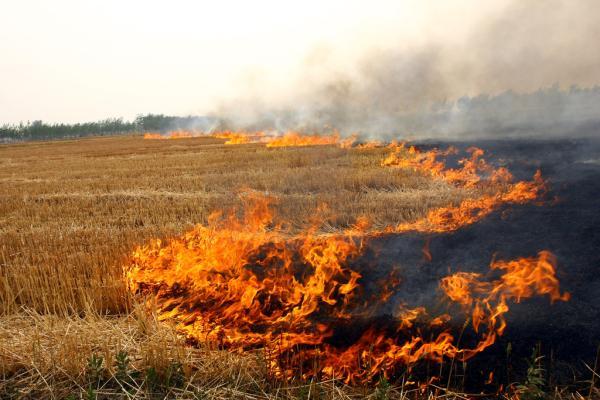
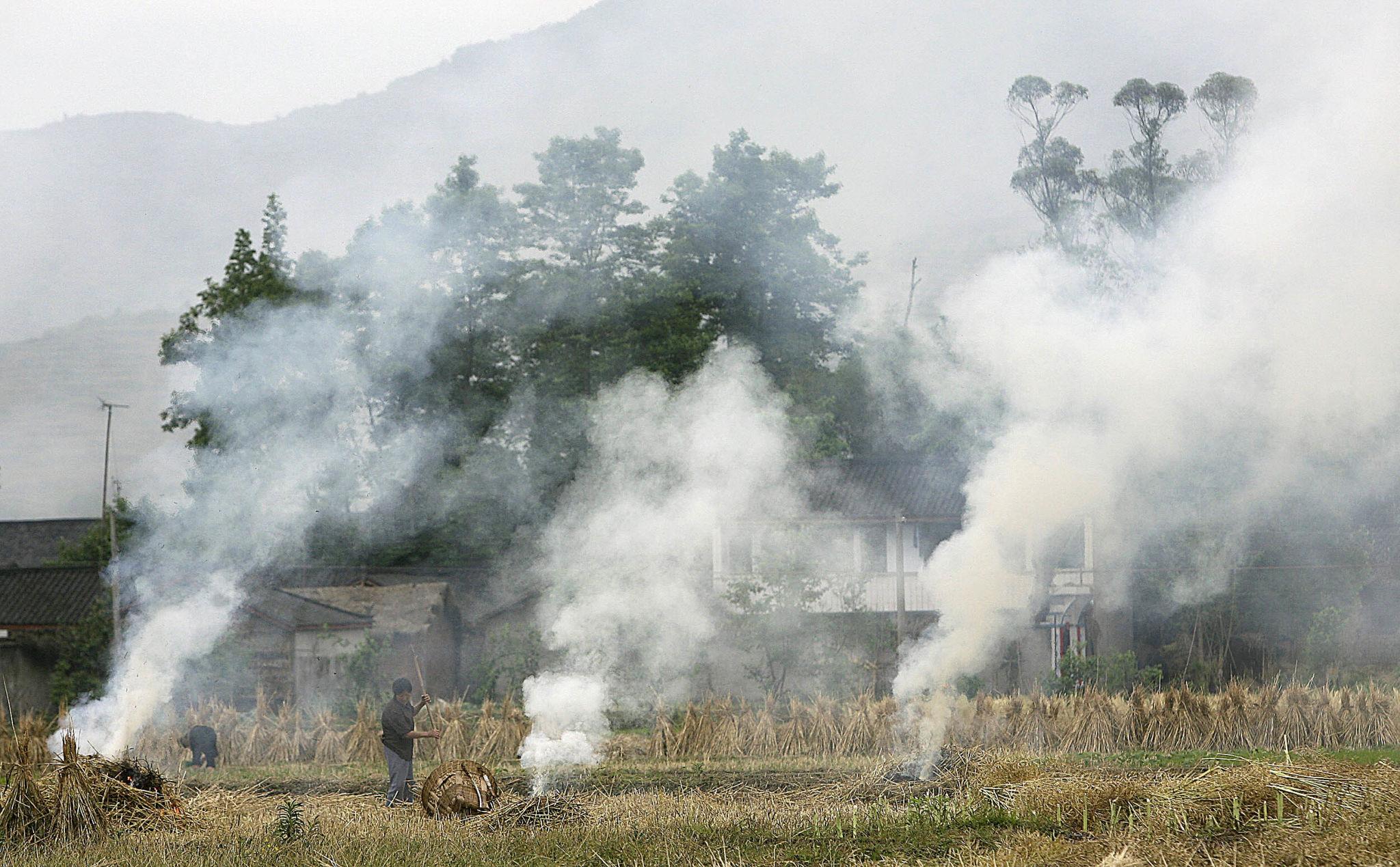
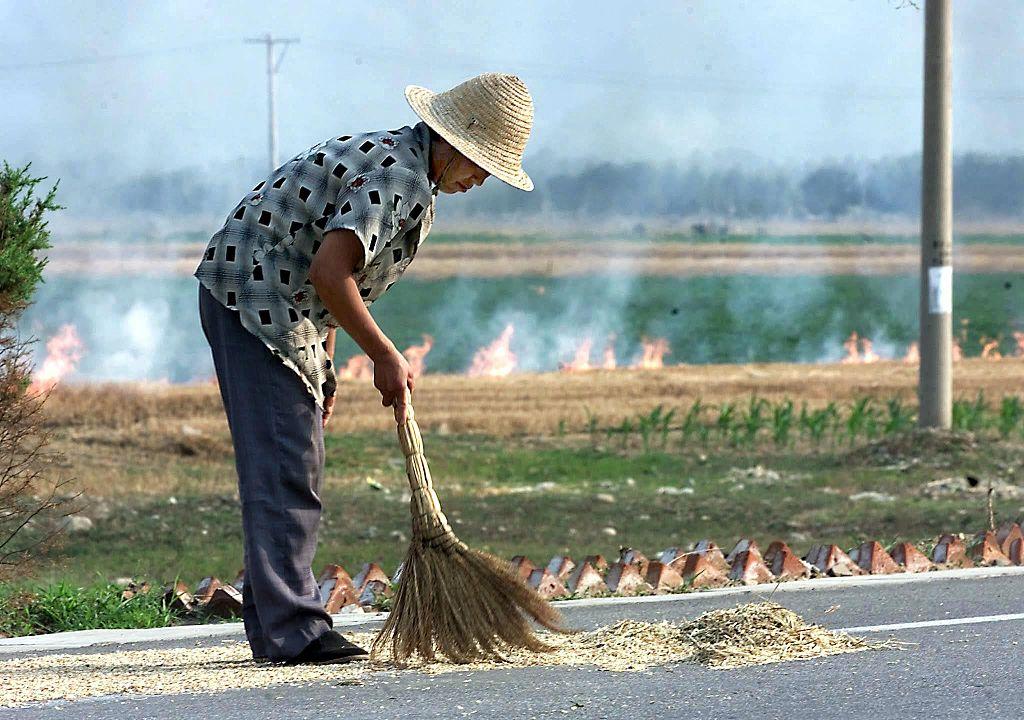
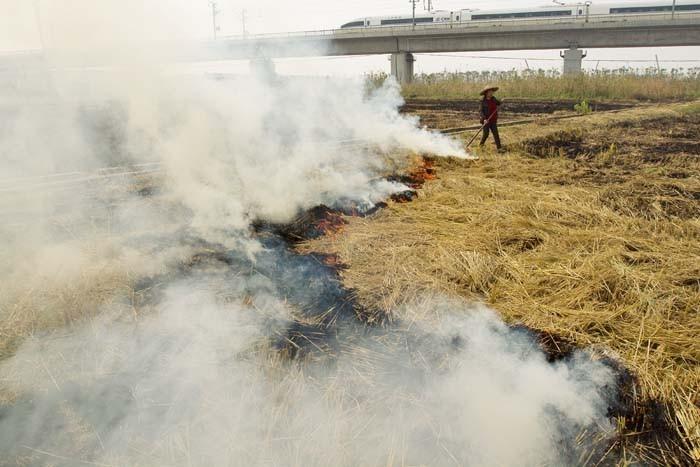
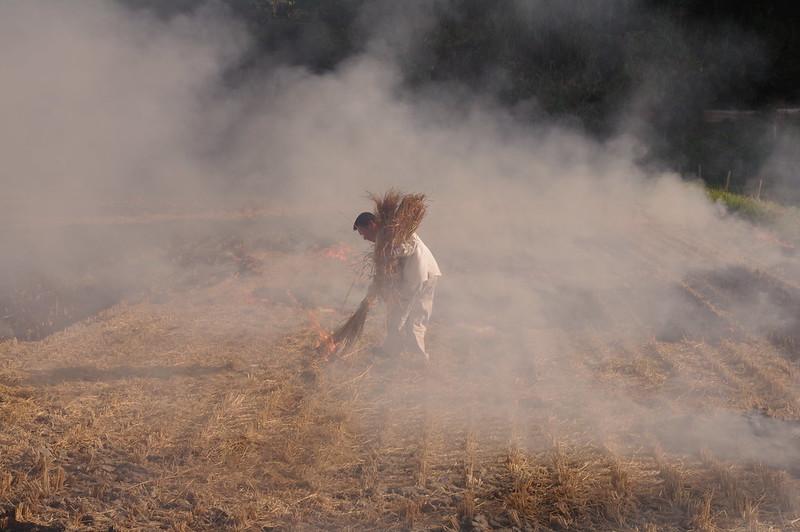

2008 was a very clear turning point in the history of the straw burning ban policy.
On 21 April 2008, the Ministry of Environmental Protection issued the Notice on Further Strengthening Straw Burning Prohibition (Huan Fa [2008] No. 22).
The document made clear that, in order to protect air quality in the Olympic host cities:
From early May to the end of September 2008, nine provinces and municipalities — Beijing, Tianjin, Hebei, Henan, Shandong, Shanxi, Anhui, Jiangsu, and Liaoning — were designated priority burning ban zones, and a full ban was implemented.
This is markedly different from the priority-zone prohibition of 1999.
1. The governance scope expanded significantly
The 1999 approach was mainly to protect key locations such as airports, highways, and railways.
In 2008, the cross-regional transport of air pollution began to more visibly shape policy design.
The smoke from a field in Henan or Hebei does not necessarily only affect the vicinity of the field. Given suitable meteorological conditions, pollutants can cross administrative boundaries and affect regional air quality.
The 2008 ban management therefore already embodied the idea of regional joint prevention and control.
2. The administrative accountability mechanism was further strengthened
The 2008 policy stressed that local governments bear overall responsibility for straw burning prohibition in their jurisdictions, and incorporated burning ban performance into environmental protection target assessments.
It also strengthened:
- Dedicated inspection and supervision;
- Satellite remote-sensing fire-point monitoring;
- Investigation and handling of illegal activities;
- Assessment and accountability for the implementation of burning ban work.
This meant that straw burning was no longer purely a matter of farmers’ production behavior; it also became a matter of local governments’ environmental governance performance.
3. In 2008, comprehensive utilization policies were also issued
In the same year, the General Office of the State Council issued the Opinions on Accelerating the Comprehensive Utilization of Crop Straw (Guo Ban Fa [2008] No. 105).
It emphasized converting straw into a resource, raising utilization levels, and promoting technologies such as mechanized return to fields, feed use, and energy use.
From the standpoint of institutional design, 2008 in fact contained two parallel policy tracks: strengthening the constraints of the ban, and developing alternative uses.
The real problem is that administrative prohibition can be implemented quickly, whereas the straw utilization industry, machinery and equipment, and collection-and-transport networks generally take longer to build.
This time lag is an important reason why contradictions have recurred since.
VI. 2013 — 2017: Smog Governance Reshaped the Policy Positioning of the Straw Burning Ban
1. The 2013 Action Plan for Air Pollution Prevention and Control
In 2013, China entered a more intensive stage of air pollution governance.
In September 2013, the State Council issued the Air Pollution Prevention and Control Action Plan (Guo Fa [2013] No. 37), commonly known as the “Ten Articles on Air.”
It elevated PM2.5 and other fine particulate pollution, as well as regional air quality issues, to an important place in national environmental governance.
In the same year, the relevant national departments pushed forward straw comprehensive utilization and burning prohibition work. In its winter 2013 air pollution prevention and control notice, the Ministry of Environmental Protection even set the strict requirement of “not a single fire, not a wisp of smoke.”
However, a distinction must be made: such work requirements are not equivalent to every piece of farmland in the country being uniformly placed under a burning ban by law.
2. Satellite monitoring made the straw burning ban assessable
Satellite remote-sensing monitoring had already been used before 2008. According to a later response from the Ministry of Environmental Protection, from 2009 a regularized daily fire-point satellite monitoring and public reporting mechanism was set up for the summer and autumn harvest seasons nationwide; in 2014 this was further strengthened with monthly reports, fire-point intensity rankings, and information disclosure.
It had a significant impact on the way local governments operated.
In the past, in-field burning was a dispersed agricultural activity, and higher-level departments found it hard to continuously track what was happening in every locality.
Satellite remote sensing made fire points locatable, aggregable, and comparable.
The shift in administrative logic
Farmers burn straw in the field
Satellite monitoring detects fire points; localities verify
Statistics, notifications, and rankings by administrative region
Local governments strengthen responsibility allocation, inspection, and assessment
This system has an obvious advantage: it improves the efficiency of detecting environmental violations.
But it also carries a potential problem: if assessment depends excessively on the number of fire points, localities may pay more attention to “no fire points appearing” than to whether straw is actually being disposed of effectively.
The latter is an analysis based on administrative incentive mechanisms and does not in itself prove that such distortions exist in every locality.
3. Actual monitoring data show a clear change
According to data disclosed by the Ministry of Environmental Protection in 2015:
The 2013 figure is calculated from the officially published 2014 figure of 5,034, a year-on-year decrease of 2,844.
Year-on-year decline from 2013 to 2014
36.3%
The statistics use the satellite remote-sensing and verification methodology of the time. The reduction in monitored fire points is not, on its own, sufficient to prove that the decline is entirely attributable to the burning ban policy, nor does it directly translate into a calculable improvement in PM2.5.
4. 2015 revision of the Air Pollution Prevention and Control Law
The Air Pollution Prevention and Control Law revised in 2015 and implemented from 2016 further clarified:
- Article 76: encourages and supports the resource-based utilization of straw, and the building of a collection–storage–transportation and utilization service system.
- Article 77: requires provincial-level people’s governments to delineate zones where open-field burning is prohibited.
- Article 119: sets out administrative penalties for illegal burning.
Among them, Article 119, for straw burning in the open field under the circumstances it specifies, set a fine range of 500 — 2,000 yuan. Its exact application still needs to be assessed in light of the location of the violation and the legal provisions in force at the time.
Compared with the 1999 management measures’ fines of up to 20 yuan, legal constraints have clearly been strengthened.
VII. 2018 — 2024: Comprehensive Burning Bans, Grid Management, and Grassroots Governance Contradictions
In 2018, the State Council issued the Three-Year Action Plan to Win the Battle for Blue Skies.
The document specifically required:
- Strengthening local governments’ principal responsibility for the burning ban;
- Establishing a grid-based regulatory system in key zones;
- Conducting dedicated inspection during the summer and autumn harvest periods;
- Northeast China to formulate dedicated plans for concentrated burning;
- Combining blocking and channeling, so that by 2020 the national comprehensive utilization rate of straw would reach 85%.
Note: the document also explicitly required the Northeast to strengthen scientifically ordered channeling, which shows that the central-level policy has not always advocated an undifferentiated ban on all burning.
1. Why did some localities adopt stricter comprehensive burning bans?
Three factors can explain it.
Administrative enforcement cost: Zone- and time-phased management requires analysis of geography, meteorological conditions, burning scale, and pollution dispersion, and is administratively complex.
Accountability pressure: For grassroots administrators, a blanket prohibition on all in-field fire points is often easier to operate than demonstrating that a particular burn’s risk is controllable.
Insufficient agricultural alternatives: When straw collection-and-storage and comprehensive utilization are not yet fully covered, the burning ban becomes a policy tool that can be implemented immediately.
These factors together pushed some localities toward comprehensive burning bans, grid inspection, and fixed-point duty.
A distinction should be made, however: the delineation of local burning ban zones, inspection management, and administrative penalties each need to comply with their own legal basis and statutory authority. Grassland-level slogans should not be read as nationwide unified law.
2. The contradiction is especially visible in Northeast China
The Northeast is one of the most typical regions in the country.
Compared with the Huang-Huai-Hai summer-harvest region, the Northeast also faces cold winters, late spring soil thaw, slow straw decomposition in some cases, and large field areas.
Straw return to fields has real value for protecting soil and adding organic matter, but if machinery operations, straw volume, soil moisture, and tillage systems are not matched, it can also affect the next sowing and seedling emergence.
A 2024 Ban Yue Tan report described the real dilemmas faced in some parts of the Northeast, including the high cost of removing straw from fields, the insufficient decomposition of straw returned to fields, and the heavy investment in grassroots inspection.
Such reports reflect the real difficulties of local governance, but the fact that individual farmers have observed changes in pests and diseases does not, on its own, prove that straw return generally aggravates pests and diseases.
3. The contradiction can be summed up as four kinds of cost
| Type of cost | Main bearer | Typical problem |
|---|---|---|
| Air pollution and health damage | Rural and urban residents | Open-field burning releases smoke and dust, forming regional pollution |
| Straw disposal cost | Farmers, cooperatives | Crushing, baling, transport, and return to fields require investment |
| Grassroots regulatory cost | Local government | Inspection, duty posts, verification, and law enforcement consume resources |
| Resource-based industry cost | Enterprises and public finance | Collection–storage–transport networks, production equipment, and stable markets |
The substance of the policy conflict is this: a burning ban can lower some social environmental cost, but it does not automatically remove the cost of disposing of straw; instead, that cost must be borne in other ways.
If the downstream disposal methods are not economical, the burning ban may have to be sustained over the long term by intensive administrative supervision.
VIII. 2025: Policy Begins to Explicitly Correct the “One-Size-Fits-All” Problem
2025 is another important turning point in the history of China’s straw burning ban policy.
The 2025 Central Document No. 1, the Opinions of the CPC Central Committee and the State Council on Further Deepening Rural Reform and Steadily Promoting Comprehensive Rural Revitalization, explicitly stated:
Support the comprehensive utilization of straw, precisely delineate burning ban zones, and implement burning ban control requirements in accordance with the law.
The most noteworthy part here is not “support straw utilization” — that has been policy for years — but rather the precise delineation of burning ban zones.
This means that at the national policy level, there is now a clearer requirement to balance the air environment, agricultural production, and governance costs, and to avoid replacing scientific management with a sweeping ban on all burning.
Two representative local policy changes
Jilin: from a comprehensive burning ban to planned burns
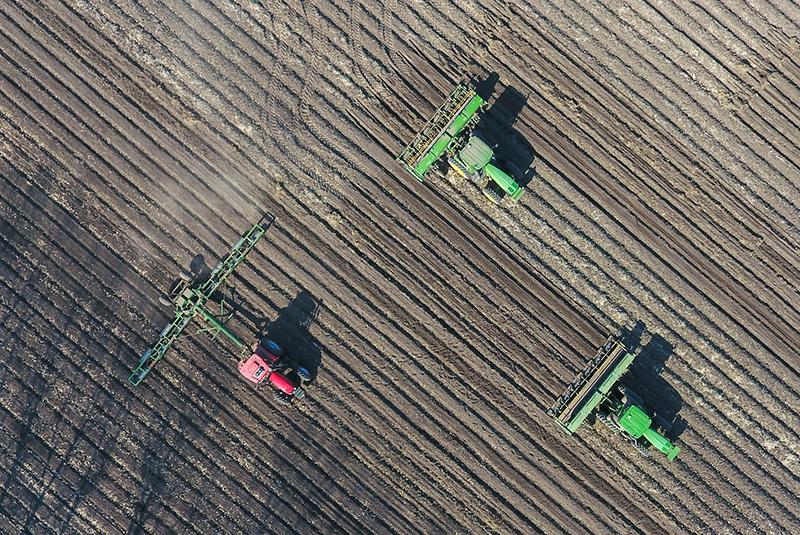
A public response issued in 2025 by the Department of Ecology and Environment of Jilin Province confirmed: since 2018 the locality had implemented different regimes including “two-zone” control and a comprehensive burning ban, and in autumn 2023 readjusted to planned burns of straw and stubble.
In 2024, it was further specified that, on the basis of prioritizing comprehensive utilization, planned burns would be organized for some of the remaining straw and for plots where mechanized operations are difficult, under appropriate conditions.
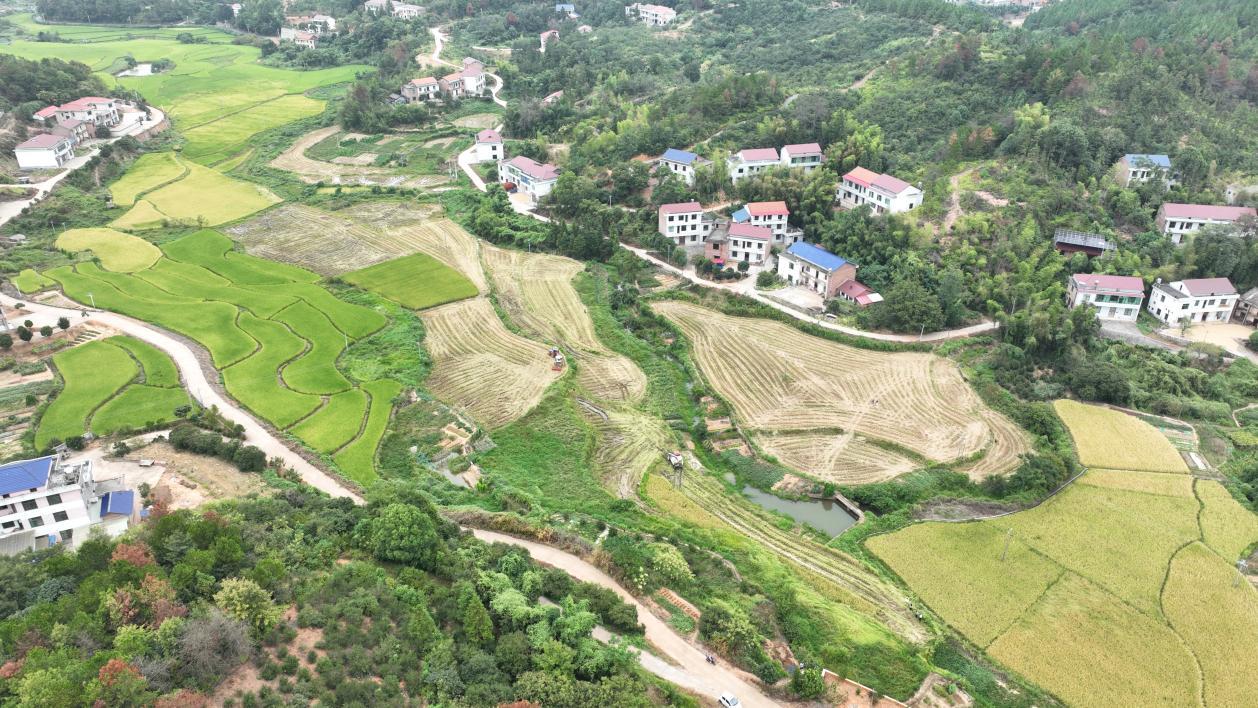
Hunan: implements classified management of burning ban zones and limited burning zones
In June 2025, Hunan Province issued the Plan for the Delineation of Straw Burning Ban Zones and Limited Burning Zones, emphasizing zoned, categorized, graded, and time-phased management based on geographic conditions, pollution dispersion characteristics, and farmland conditions.
The plan explicitly proposes preventing a simplistic “one-size-fits-all” approach, but this does not mean that within the limited burning zones burning is allowed unconditionally at any time.
These local policy changes show that there is no fully synchronized and uniform straw burning management model across the country.
In fact, the priority-zone approach of 1999, the comprehensive burning ban practiced in some localities later, and the precise zoned delineation required in 2025 form a clear trajectory of policy evolution.
IX. 2026: The Eco-Environmental Code Formally Changes the Legal Framework
As of October 2026, this is the most recent milestone that cannot be ignored in studying the history of straw burning prohibition.
On 12 March 2026, the National People’s Congress passed the Eco-Environmental Code of the People’s Republic of China, which took effect on 15 August 2026. Laws including the original Air Pollution Prevention and Control Law were simultaneously repealed, with their relevant systems being taken over and adjusted by the Code.
Article 246 of the Code explicitly provides that local governments should scientifically and precisely strengthen the organization, guidance, and management of straw and similar burning, and clearly defines the burning ban requirements in densely populated areas, around airports, near major transportation arteries, and in other zones and at the times designated by people’s governments at or above the provincial level.
Article 1,131 provides that burning conduct that meets the elements of the offense may be punished with a fine of 500 — 2,000 yuan.
The explanatory statement by the responsible official of the Legislative Affairs Commission of the NPC Standing Committee is especially important on this revision: in response to the past problem of oversimplification and “one-size-fits-all” approaches, while clarifying the prohibition of burning in priority zones, it requires that the delineation of burning bans in other zones be more standardized.
Comparison of legal philosophies across three periods
| Period | Main legal and policy approach |
|---|---|
| 1999 — 2007 | Priority-zone prohibition, local zoned management, encourage comprehensive utilization |
| 2008 — 2024 | Regional air quality assessment strengthened; some localities implement comprehensive bans |
| 2025 — 2026 | Precise zoned delineation, control in accordance with the law, tailored exploration of limited and planned burning |
In August 2026, Jilin issued a new comprehensive utilization policy, clearly designating some roads, airport surroundings, and areas near woodlands as burning ban zones, with other zones under limited burning management, alongside straw return and off-field utilization measures. This is a concrete example of the new legal framework being implemented locally.
It must be emphasized that the 2026 policy adjustment is not a nationwide restoration of free burning. Being outside a particular burning ban zone does not mean one may light a fire unconditionally; one also has to comply with the locally established rules on timing, organization and management, and fire safety.
X. Is There a Scientific Basis for the Straw Burning Ban?
This question requires separate judgments about environmental pollution, agricultural production, and governance costs.
1. Open-field straw burning does produce significant air pollution
During combustion, straw emits PM2.5, carbon monoxide, nitrogen oxides, volatile organic compounds, and black carbon, among other pollutants.
A 2015 study published in Atmospheric Environment conducted field measurements of in-field straw burning in eastern China and confirmed that open-field burning of different crop residues releases particulate matter and a range of gaseous pollutants.
That does not, however, imply that all of China’s smog is mainly caused by straw burning.
As an example of quantitative research:
Simulated contribution of straw burning in Hebei to PM2.5 in Beijing–Tianjin–Hebei
Based on 2014 emission inventories and atmospheric modeling
Average contribution in June
4.2%
Average contribution in October
5.5%
The study also found that, on specific pollution days, the simulated contribution of straw burning in Hebei to the daily average PM2.5 concentration in Beijing could reach up to 25.7%.
This is the modeled result of Hebei’s burning source for a specific year, month, and pollution day in the Beijing–Tianjin–Hebei region. It is not a national average contribution, nor does it represent all heavy-pollution weather.
This shows that straw burning is usually not the most important pollution source in every season, but during harvest periods, when large-scale concentrated burning coincides with unfavorable meteorological conditions, it can indeed become an important driver of regional air pollution.
2. Burning is not entirely without an agricultural role
Traditionally, farmers used burning to clear fields for clear practical reasons.
Burning can quickly remove surface residue and, under some conditions, reduce some weed seeds and pest vectors. The ash also retains some mineral components such as potassium and calcium.
At the same time, however, combustion loses large amounts of organic carbon and some nutrients, releases pollutants, and can damage the surface soil environment.
By contrast, scientific return-to-field can increase soil organic matter inputs, but the decomposition process, pest and disease risk, and sowing outcomes all depend on specific soil, climate, and operating conditions.
Both extreme claims are therefore inaccurate:
- “Burning straw does no harm to the environment or land at all.”
- “Returning all straw to the field is necessarily better than any other disposal method, everywhere.”
Reviews of relevant research from agricultural science institutions have clearly discussed the long-term soil benefits of straw return, as well as the applicability issues such as slow decomposition, pests and diseases, and impacts on crop growth.
XI. What Has the Burning Ban Actually Changed Economically?
An easily overlooked point: the straw burning ban does not only affect the air. It also changes farm operating costs, which in turn affect land transfer and mechanization investment.
A 2026 study published in the Journal of Agricultural Economics, using a panel of rural households from 2009 to 2015, analyzed differences in the timing of strict burning bans across provinces.
The study found that, within its identification conditions and sample scope, the burning ban promoted land transfer within villages: more productive farmers expanded their operating area, while less efficient farmers tended to withdraw from part of the land. The study estimated that, at the sample village level, total agricultural output and productivity rose by about 5% and 3% respectively.
The study also found that in villages near biomass power plants, the land transfer and production adjustments after the ban were more pronounced.
This points to a more complex conclusion:
The burning ban policy may simultaneously push scale-oriented agriculture forward, while placing a relatively greater burden on small farmers who lack capital, machinery, and labor capacity.
The 5% and 3% figures above are estimates from a specific sample and econometric model. They should not be taken as the definite effect of the burning ban policy nationwide across all years, nor directly equated with increases in individual farmers’ incomes.
What level has nationwide straw comprehensive utilization reached?
According to data published by the Ministry of Agriculture and Rural Affairs, in 2024:
Total straw volume
870 million tons
Collectable volume
730 million tons
Comprehensive utilization rate of collectable straw
Over 88%
The statistical scope is the comprehensive utilization rate of collectable straw, not the direct utilization ratio of total straw output.
After years of development, China has formed a utilization pattern dominated by fertilizer and feed use, supplemented by energy, substrate, and material uses.
But comprehensive utilization rate is not the only metric that should be assessed. It is also necessary to consider disposal cost, the quality of actual utilization, long-term soil benefits, and whether the related industries can be sustained without persistent high subsidies.
XII. Comprehensive Assessment: What Does This History Reflect?
From the perspective of public policy history, China’s straw burning ban has undergone three notable shifts.
1. From a resource utilization issue to an environmental governance issue
In the early days, the government was more concerned with how to use straw. After the 1990s, the pollution and public safety risks of concentrated open-field burning became increasingly prominent, and the burning ban gradually became an independent and important policy goal.
A 1998 news item is particularly representative.
A People’s Daily report dated 19 May 1998 described how, because farmers near Chengdu Shuangliu Airport burned straw, dense smoke forced the airport to close three times within 24 hours, with 17 flights delayed, returning, or diverting. The report also noted that similar incidents had occurred at the airport for three consecutive years since 1996.
Such incidents specifically explain why the earliest nationwide management regulation in 1999 placed particular stress on burning bans around airports and major transportation arteries.
2. From addressing specific pollution to assessing the entire administrative region
In 1999, the focus was mainly on priority-zone control.
In 2008, broader joint prevention and control requirements emerged.
After 2013, monitoring, rankings, target assessments, and grassroots accountability mechanisms kept being reinforced.
When a public governance issue is converted into an assessable indicator, it can indeed improve implementation efficiency, but it also creates the risk of oversimplification.
The history of the straw burning ban therefore has typical value for administrative management research: a reasonable policy objective does not guarantee that every implementation method is reasonable.
3. From pure prohibition to gradually revisiting agricultural economic realities
Straw is an inevitable by-product of crop production.
Farmers do not stop producing straw because of an administrative ban; only when return-to-field, collection-and-storage, or other utilization methods are feasible in actual production will the economic motivation for open-field burning continue to decline.
This is also the deeper cause behind the greater emphasis on precise zoned delineation, scientific management, and comprehensive utilization in the 2025 — 2026 policies.
From international experience, the United States, the United Kingdom, Canada, and other countries have also used permits, smoke management plans, and zone- and time-specific restrictions to manage agricultural burning. They have not simply chosen between a complete ban and complete deregulation.
Final Conclusion
Looking at nearly 30 years of China’s straw burning ban history together, the following judgments emerge:
First, the ban did not emerge out of thin air. It has a real basis in pollution prevention and public safety, especially the 1990s cases of airports affected by straw burning smoke.
Second, the strengthening of the ban’s reach happened in stages. In 1999 a nationwide priority-zone management system was established; in 2008 a comprehensive burning ban was reinforced during the Olympics; after 2013 the assessment system was further strengthened within the air pollution prevention and control framework, with significant variation in local implementation.
Third, a comprehensive ban and a reasonable ban are not the same thing. Strict control over high-risk zones is well grounded, but requiring that no farmland be burned under any conditions requires equal consideration of agricultural production, governance costs, alternative technologies, and legal authorization.
Fourth, the 2025 — 2026 policy adjustments have substantive historical significance. They do not negate the earlier objectives of the ban; rather, while keeping the environmental protection and public safety constraints, they begin to more clearly address the long-standing problem of enforcement rigidity.
Ultimately, the core of this history can be summed up as follows:
China’s straw burning ban policy has evolved from “prohibition in priority zones,” to “comprehensive burning bans in some areas,” and then to “precise delineation in accordance with the law, with comprehensive utilization as the priority and scientifically ordered control.” What it reflects is not only a shift in environmental policy, but also a process in which administrative management has gradually adapted to the realities of agricultural production.
If this research is to be taken further, I believe the most worthwhile subject for a separate study is the period 2008 — 2015: how central policy, local legislation, satellite fire-point assessment, and grassroots burning ban enforcement interacted with each other. This is the key period for understanding why some localities moved from the original zoned control toward comprehensive burning bans, and why policy was later readjusted.